Saharanpur’s identity is written in carved wood. In Khatakheri, known as the Wooden City, workshops carry forward a tradition of floral carving, intricate jaali and decorative inlay.
This is an illustrated guide to a typical journey of a wooden craft object. The timber, techniques and sequence vary with the design. The scenes show the process, rather than a documented Craftroot supply chain.
Long before a pattern is drawn, the wood has its own character. Species, growing conditions and grain influence the colour, strength and feel of the eventual piece.
THE DETAIL THAT MATTERS
Sheesham, mango and other timbers offer different qualities. The material is chosen for the object, rather than for its appearance alone.
The roots · Harvesting
From standing tree to workable timber.
When a tree is harvested, the trunk is cut into manageable logs. At this stage, the wood still holds moisture and must be assessed before it can become a stable craft material.
THE DETAIL THAT MATTERS
Species, condition and sourcing documentation belong at the beginning of a material conversation.
The roots · Transport
The journey to the workshop.
Logs are sorted, secured for transport and brought to a timber yard, mill or factory. Here, the raw material is organised for conversion, drying and the work that follows.
THE DETAIL THAT MATTERS
Careful handling protects the timber. Clear identification keeps the intended material connected to the project.
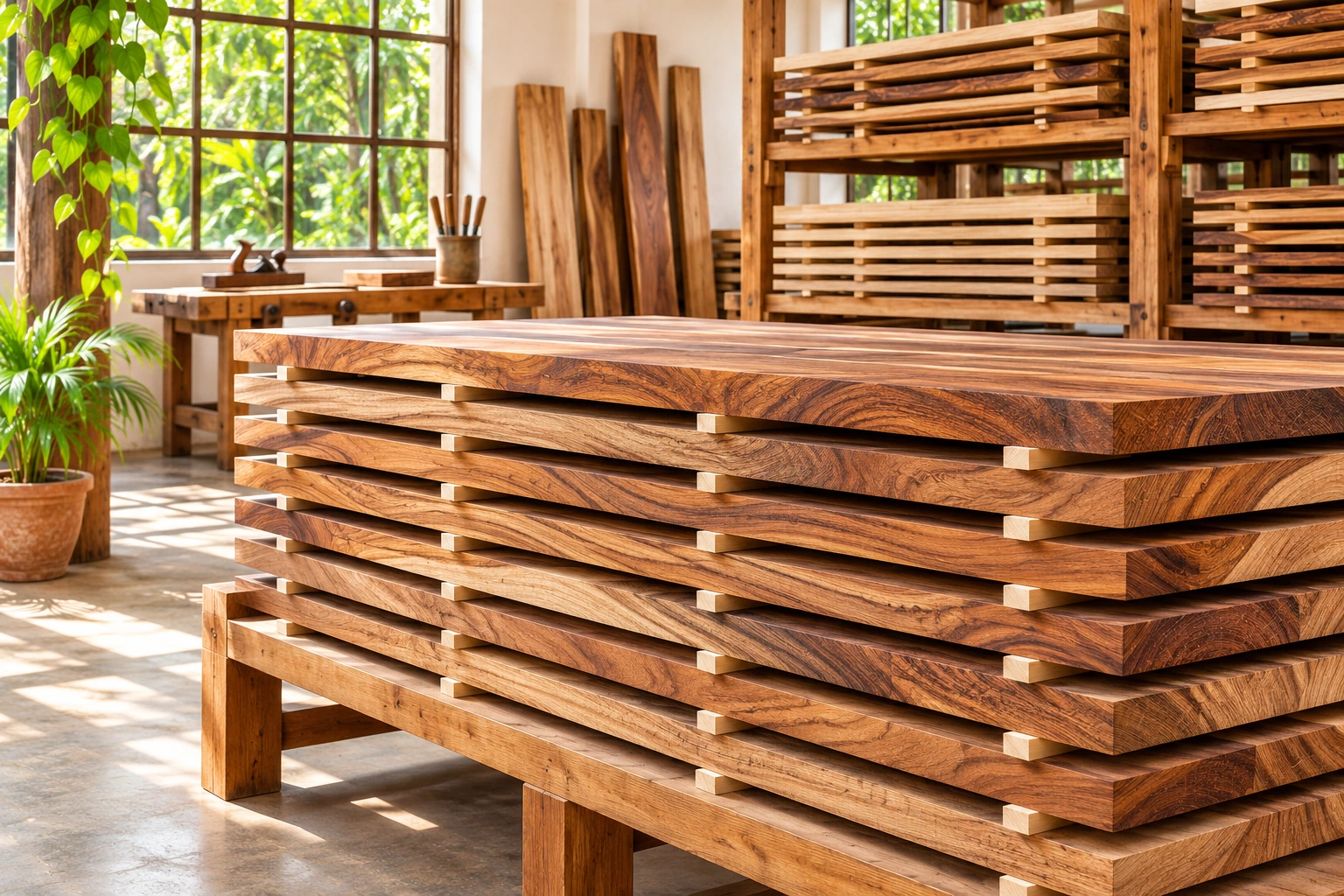
The workshop · Seasoning
Time is part of the craft.
Fresh timber needs to lose excess moisture before it is worked. Boards are stacked with spacers for airflow, or dried in a controlled kiln, according to the timber and its intended use.
THE DETAIL THAT MATTERS
Seasoning helps reduce movement, distortion and cracking. A suitable moisture level depends on the material and destination.
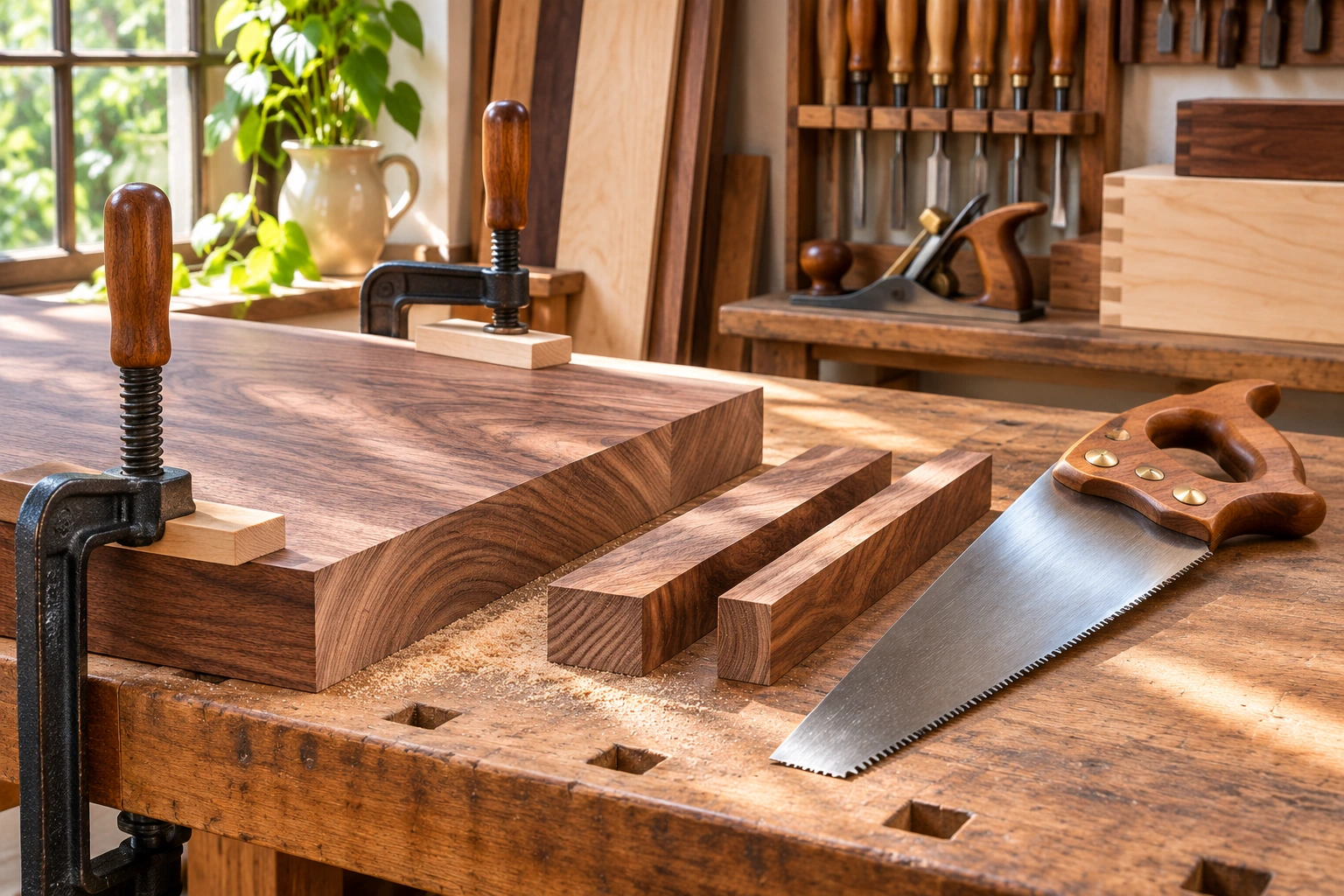
The workshop · Cutting
A shape begins to emerge.
Seasoned boards are selected for grain and condition, then cut and prepared into useful sections. The scale of a tray, the sides of a box or the proportions of a panel begin here.
THE DETAIL THAT MATTERS
Grain direction and sound joinery matter as much as the silhouette.
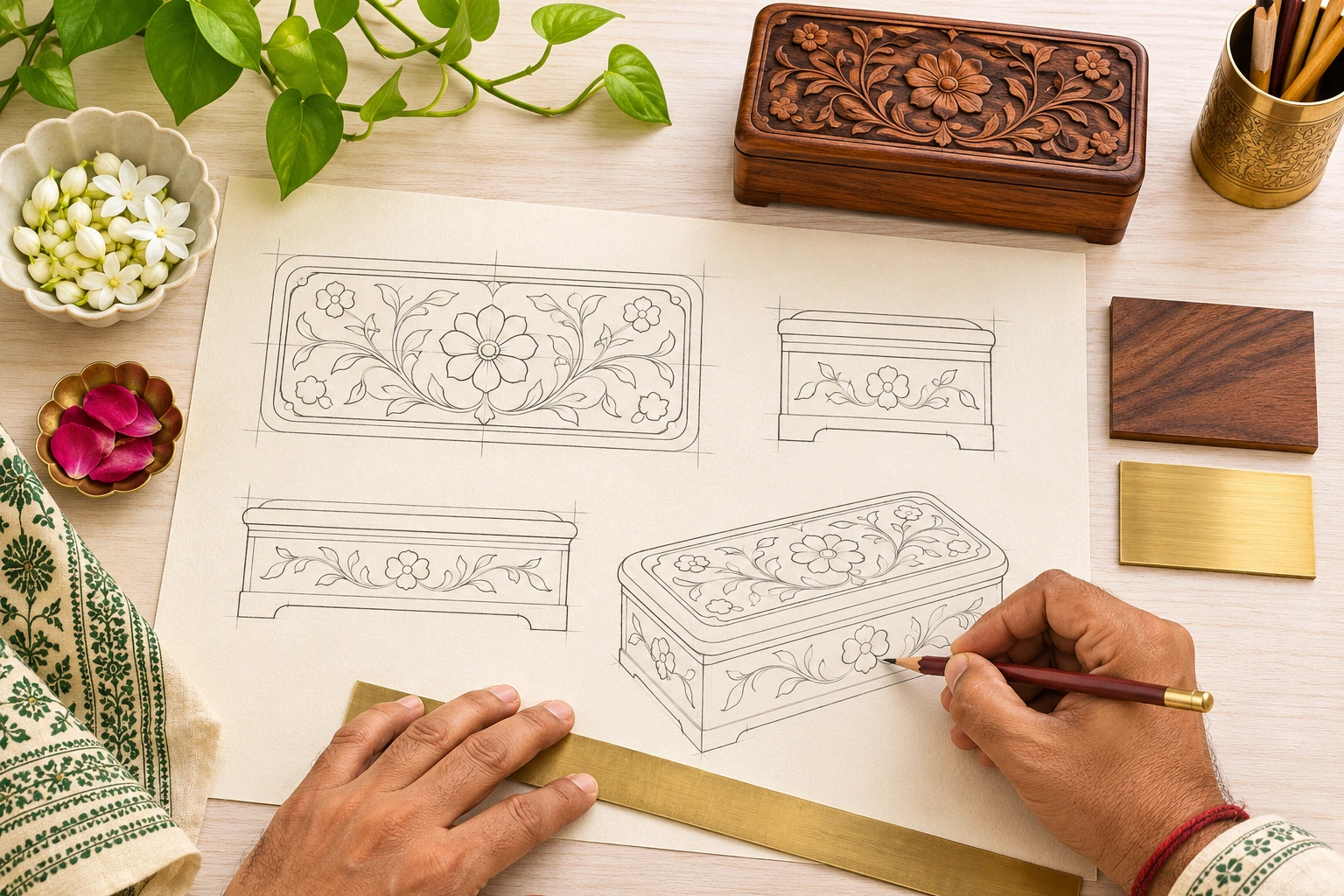
The workshop · Design
An idea finds its proportions.
A sketch brings together purpose, shape and ornament. The designer considers how a lid opens, how a handle feels and how a floral pattern will sit within the grain.
THE DETAIL THAT MATTERS
A beautiful detail should serve the object: its balance, its use and its place in a room.
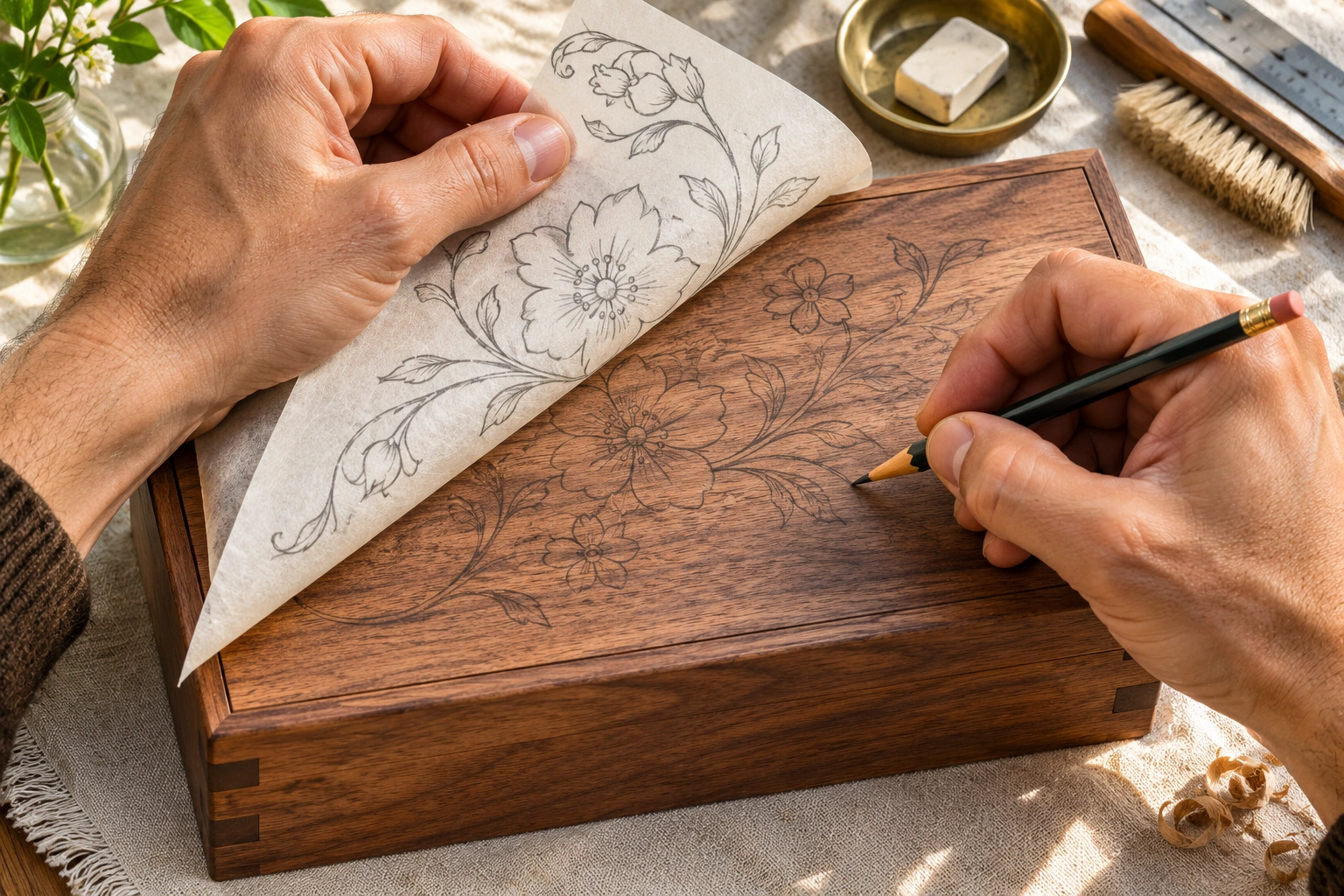
The artistry · Draft & transfer
A line becomes a promise.
The approved drawing is refined into a working pattern and transferred onto the wood. These guide lines establish borders, repeated motifs and the areas that will be carved away.
THE DETAIL THAT MATTERS
Clear pattern placement helps the artisan maintain rhythm and leave enough material for strength.
The artistry · Handcrafting
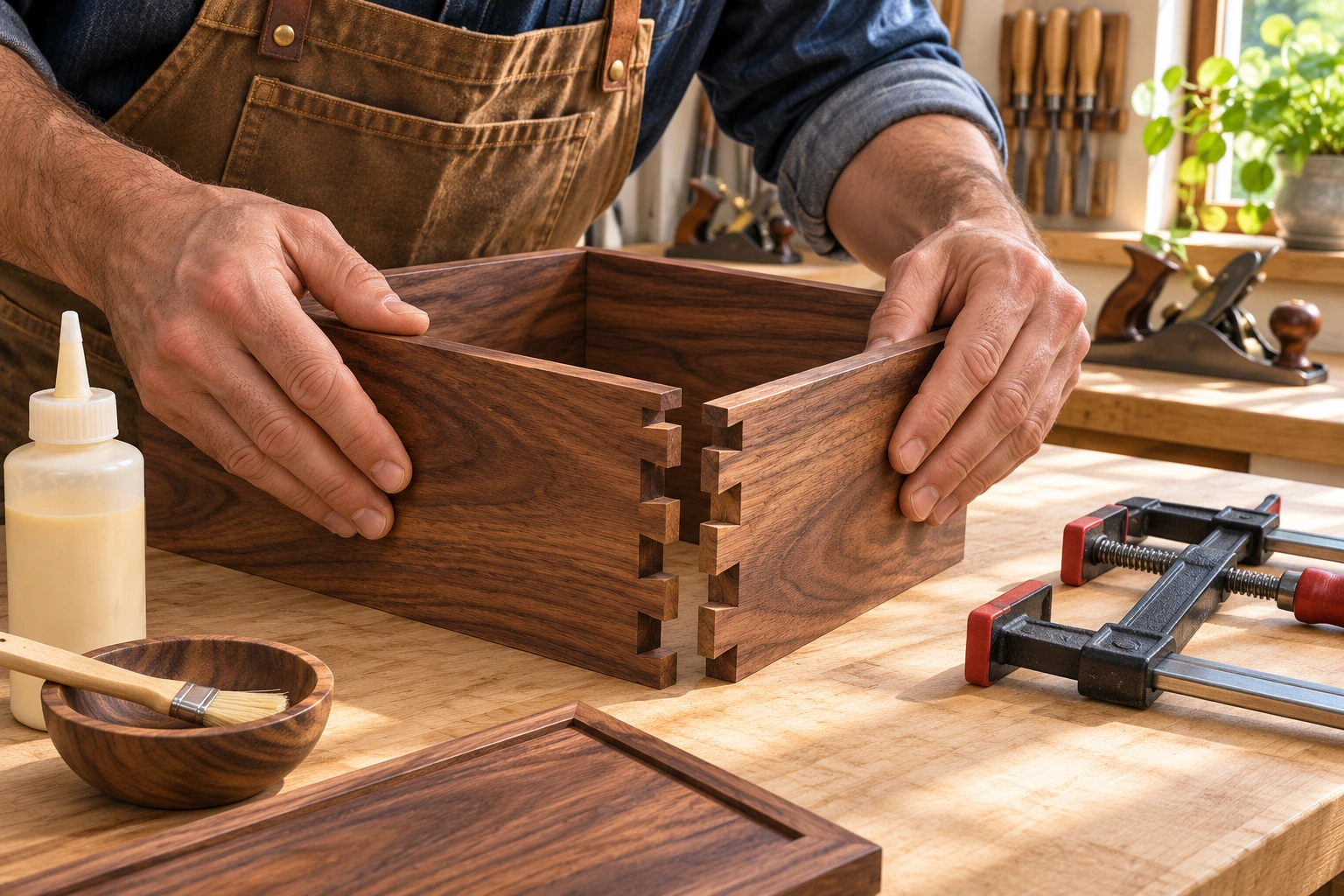
Built with care. Fitted by hand.
Components are shaped, fitted and assembled. Edges are refined and joints checked so that the piece feels coherent before the decorative work and final finish are complete.
THE DETAIL THAT MATTERS
A lid that sits well and an edge that feels smooth are part of the same attention to craft.
The artistry · Hand carving
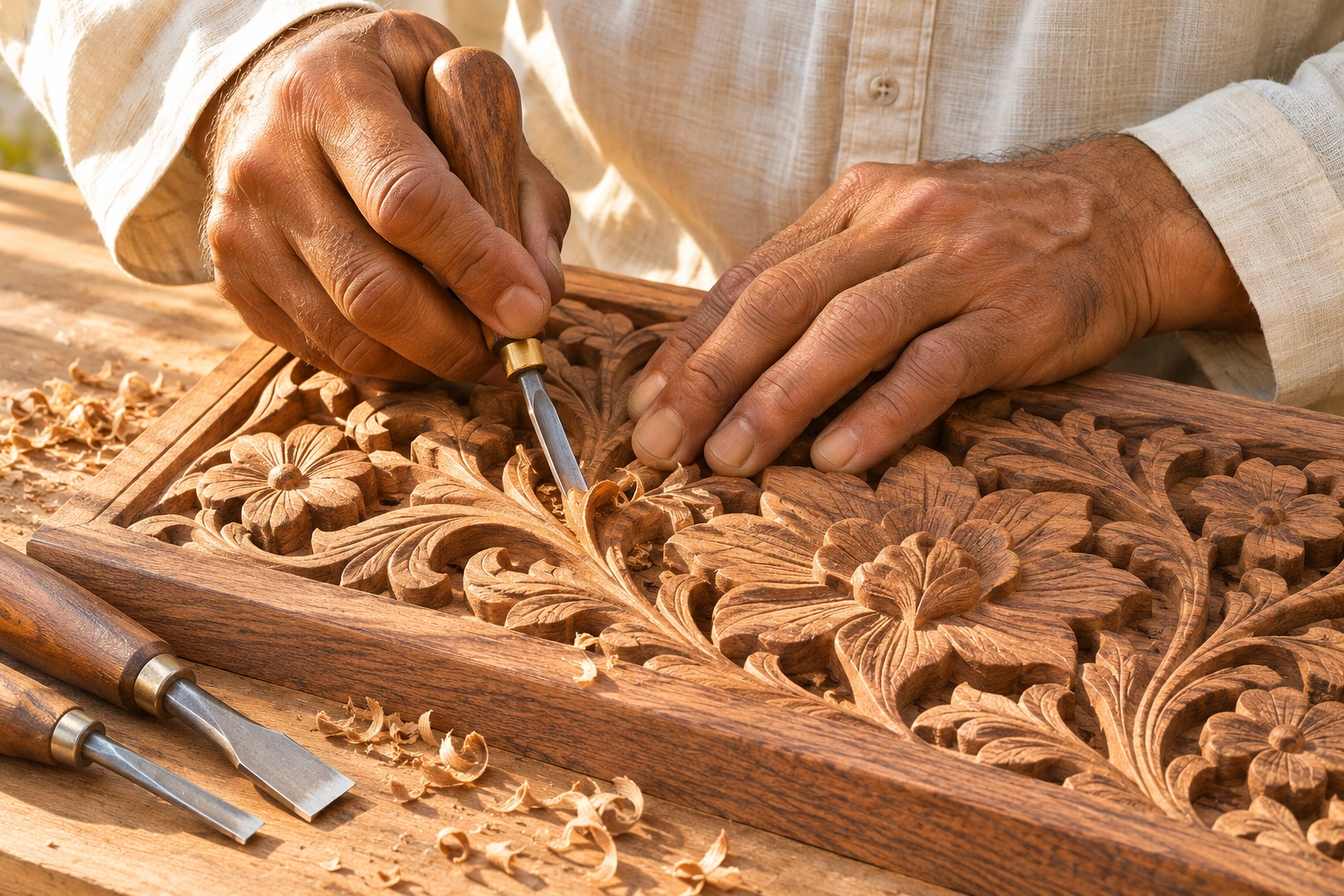
Where the wood finds its voice.
Chisels and gouges bring depth to the drawn pattern. Leaves unfold, borders become tactile and a flat surface acquires the play of light and shadow that makes carving so distinctive.
THE DETAIL THAT MATTERS
The artisan works with the grain, adapting each cut to the wood and the relief of the design.
The finish · Painting
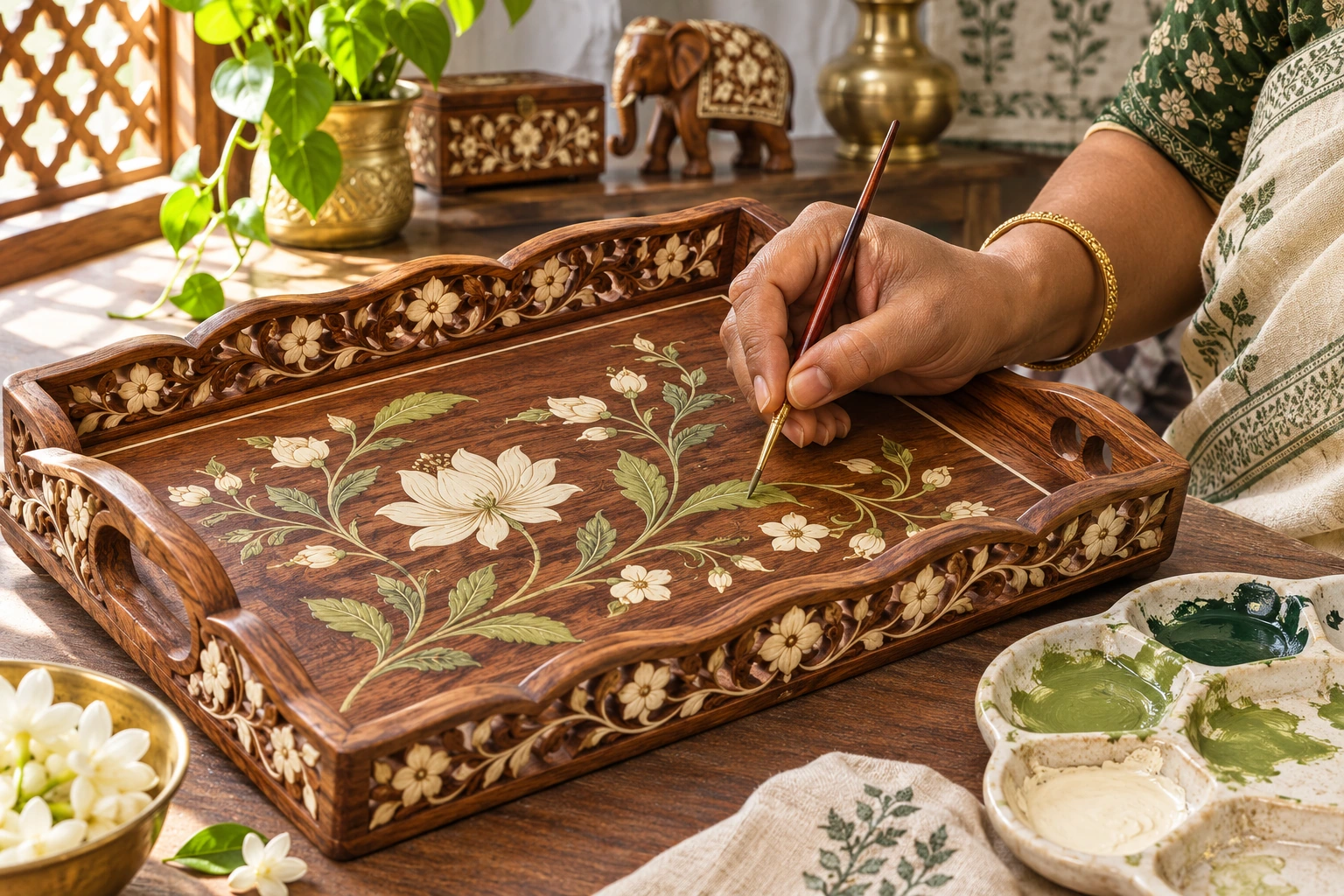
Colour, placed with intention.
Where the design calls for colour, carefully applied paint highlights the motif or transforms the surface. Other pieces keep the wood visible, allowing its natural grain to remain the focus.
THE DETAIL THAT MATTERS
Paint, stain and clear finishes create different effects. The choice is agreed around the intended look and use.
The finish · Sand & polish
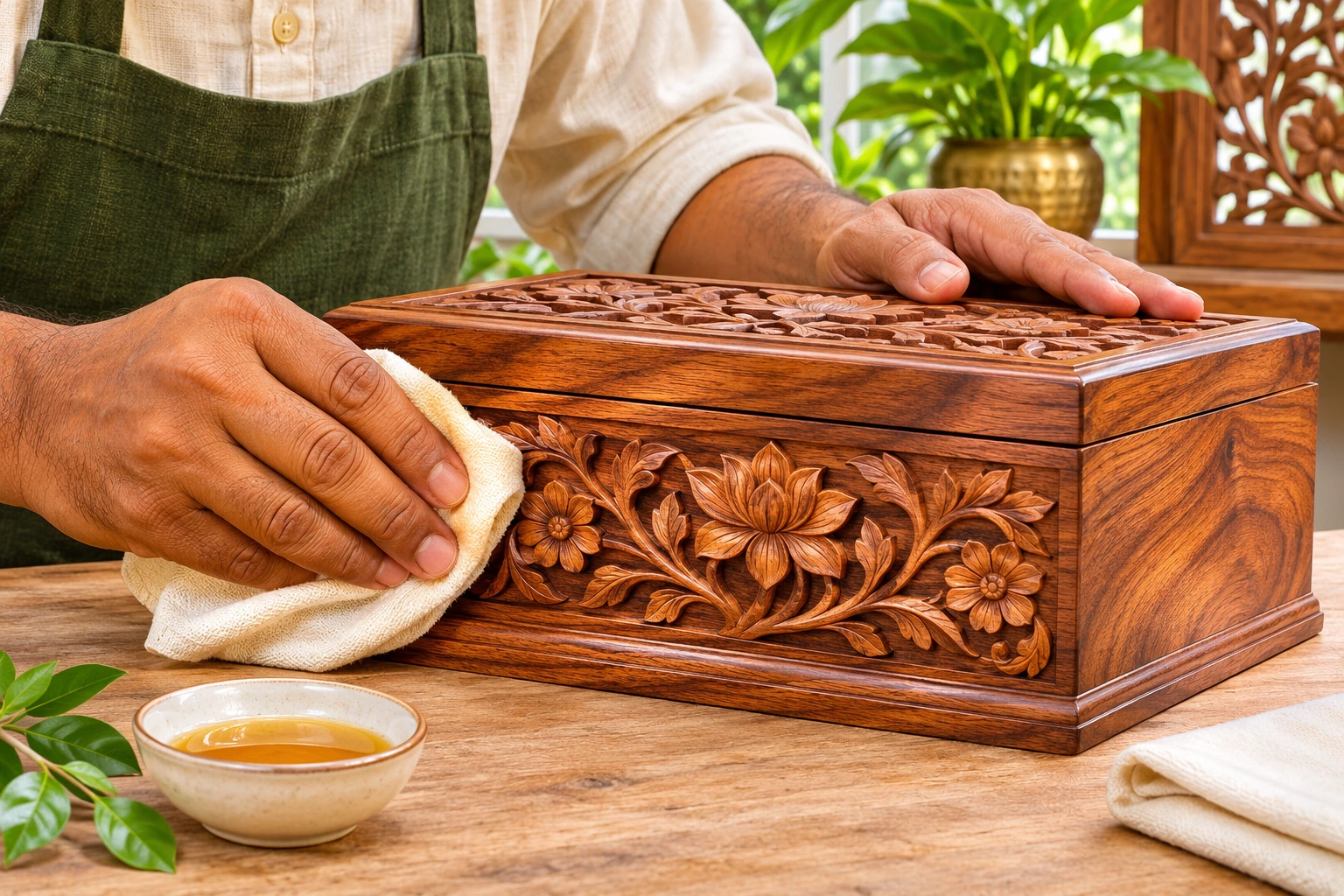
The final touch. The lasting feeling.
The surface is smoothed, dust is removed and the chosen finish is applied. Polishing brings out the depth of the grain and gives edges, carved details and broad surfaces their final feel.
THE DETAIL THAT MATTERS
The finish should be specified for its purpose. Decorative objects and serving pieces can require different treatments.
The finished piece
Made by hand. Kept for the feeling.
From a raw material to a considered object. Grain, pattern and finish come together in a piece ready to become part of everyday life.
Process scenes are AI-created editorial illustrations; the finished arrangement is a supplied visual reference. Materials and methods are confirmed for each product.